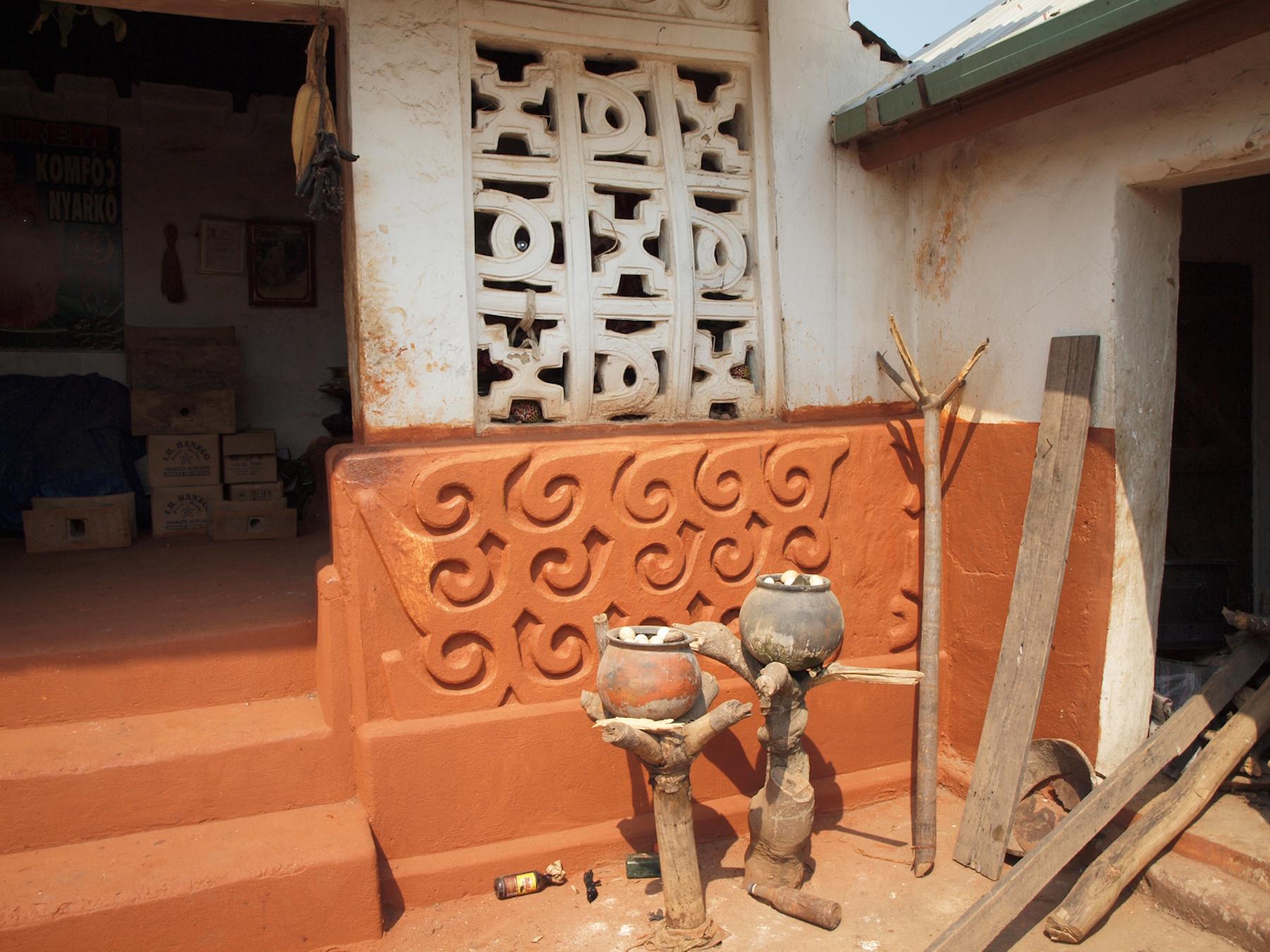

In Ghana, the spiritual landscape stretches far beyond the walls of churches and mosques. Deities like Antoa and Tigare continue to command deep respect and fear even in a society where Christianity and Islam dominate. These are not relics of a forgotten past. They are active forces in the spiritual, social, and judicial lives of many Ghanaians.
The Enduring Power of Antoa and Tigare
Antoa Nyamaa and Tigare stand as two of the most renowned and feared deities in Ghana. Their power is deeply embedded in the cultural consciousness, and their names alone can evoke profound awe. Historically, the mere mention of these names struck fear in the hearts of those who heard them because they are seen as supremely powerful arbiters of justice, particularly in situations where human systems fail.
Antoa Nyamaa: The River God
Antoa Nyamaa is a river deity of significant spiritual authority, particularly among the Akan people of the Ashanti Region. Its shrine is located in the town of Antoa, and the deity is frequently invoked for “duabɔ” (grievance imprecation) and “nsedie” (assertive self-imprecatory oaths). This practice highlights its role as a supernatural enforcer of justice believed to punish those who commit wrongs or break oaths.
The fear of Antoa Nyamaa is so potent that it has been invoked in high-profile national matters. In 2013, a lawyer publicly called upon the deity to strike down any Supreme Court judge who might pervert justice during the landmark election petition hearing. The moment illustrated the continued trust in traditional spiritual power over formal judicial processes.
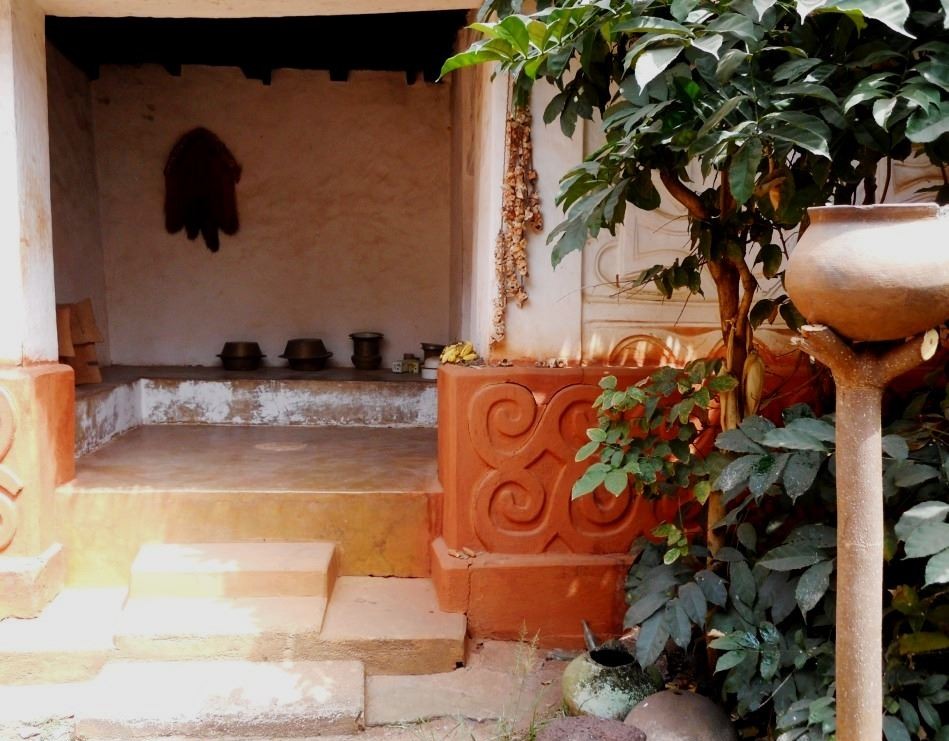
Antoa Nyamaa Shrine
Tigare: The Anti-Witchcraft Shrine
Tigare is a powerful and versatile deity with a complex history. Originating from the northern parts of Ghana, it is known as an anti-witchcraft shrine that deals with a wide array of issues. Unlike some deities tied to specific regions, Tigare’s influence has spread widely due to its effectiveness in solving problems that conventional methods including medicine cannot address.
Its practitioners often blend indigenous elements with Islamic and Christian influences to ensure its survival and relevance. In the past, the Tigare cult was even credited with providing a form of social control and deterring crime during times of rapid social change.
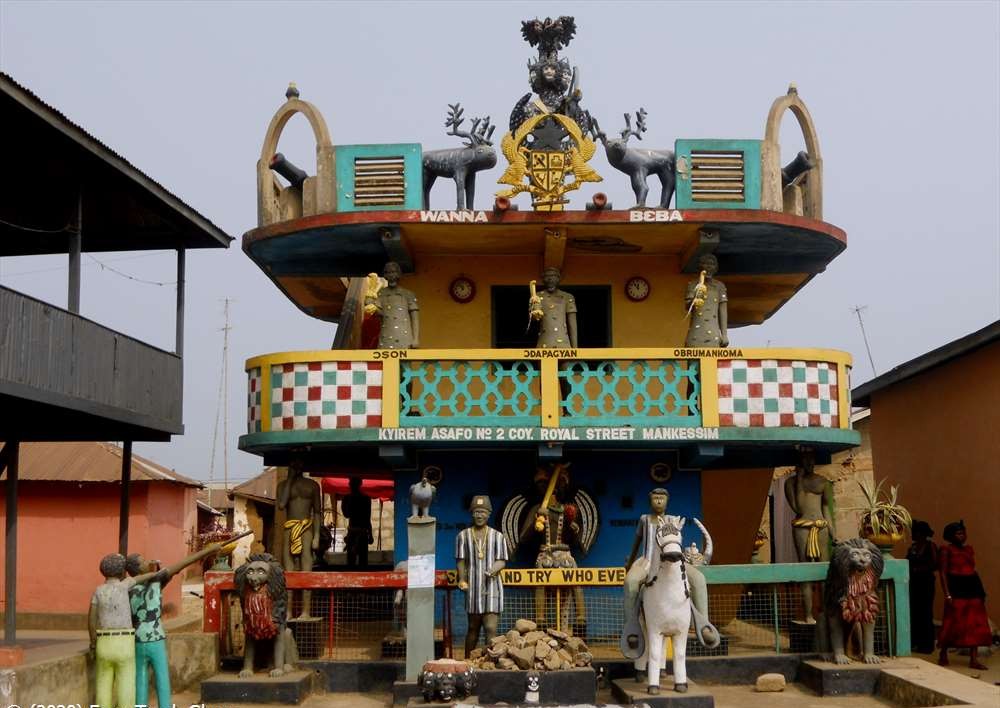
Tigare Shrine
A Resurgence of Traditional Worship
In recent years, these traditional religions have seen an upward trend in followers, particularly among the youth a notable shift from the earlier dominance of Pentecostal and prosperity churches. Many young people are returning to these “idols” for spiritual guidance.
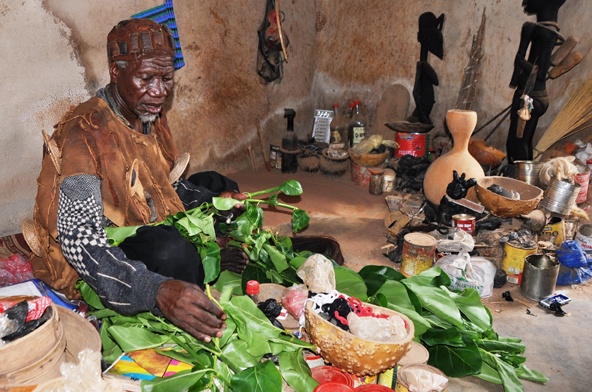
The reasons are multifaceted. These shrines address specific, tangible human needs:
- Health issues like infertility and impotence
- Academic success
- Immigration problems
- And other life challenges where conventional paths have failed
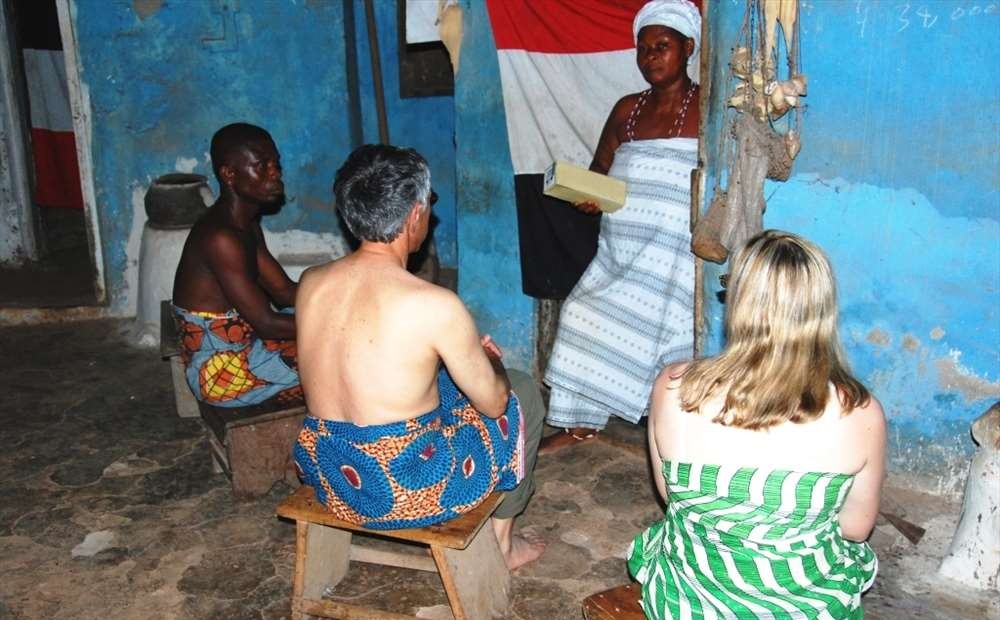
Traditional shrines are places where blessings are given by traditional West African gods and communicated by spiritual leaders to those wishing guidance, protection or prosperity
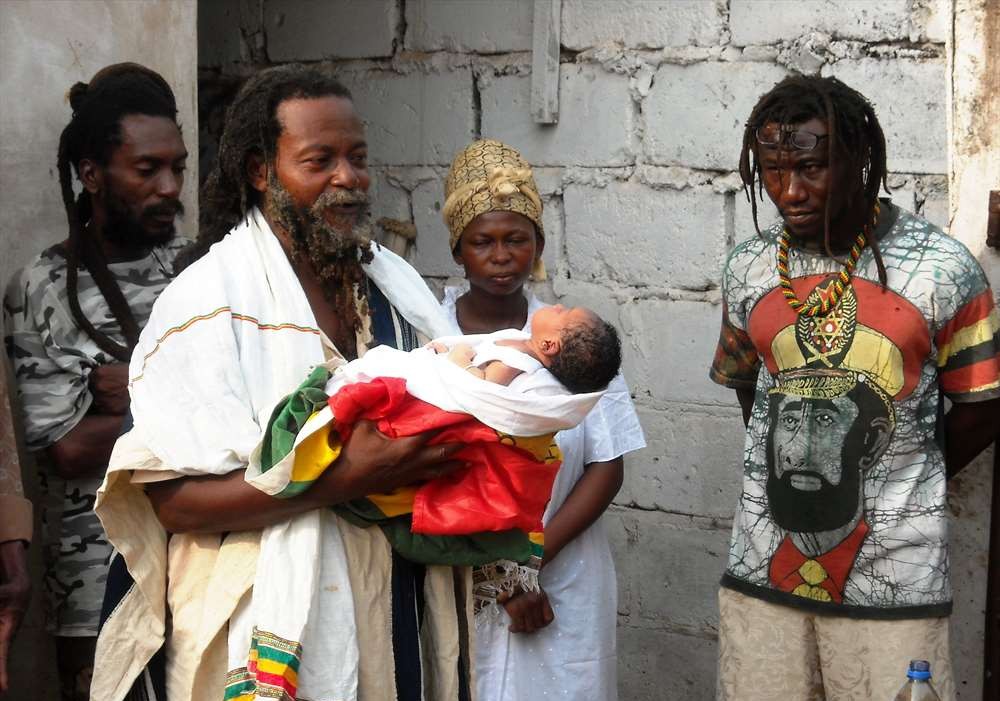
Naming Ceremony & Outdooring
Children are considered to be a gift from God in Ghana.
The appeal of a system that offers direct, often immediate, spiritual solutions remains a powerful draw.
This resurgence underscores that despite the overwhelming presence of Christianity and Islam, traditional beliefs are far from extinct. Many Christians and Muslims, while publicly adhering to their faith, still privately revere these deities acknowledging their power and sometimes even secretly patronizing them for solutions to life’s challenges. This reveals a deep-seated cultural and spiritual duality where traditional cosmology persists alongside imported religions.
The Binding Power of Hereditary Priesthood
The story of Mr. Moses Tetteh, the Tigare chief priest, and his son Godfred Tetteh, highlights one of the most challenging aspects of this spiritual system: the hereditary nature of priesthood.
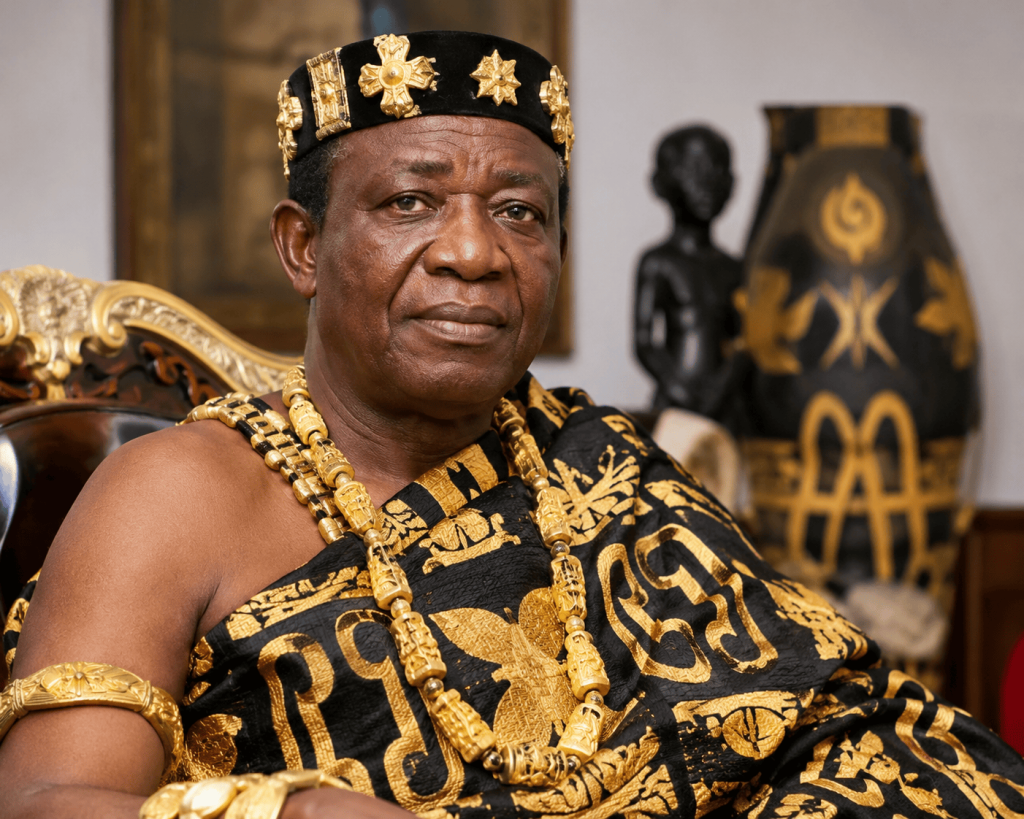
Nana Moses Tetteh
Mr. Tetteh asserts that the death of his wife was a spiritual punishment from the Tigare deity, ordained because his son mandated to succeed him has refused his calling. According to him, his wife’s silence, her refusal to condemn her son’s defiance, made her complicit. Godfred’s rejection of the faith he was meant to inherit has incurred the deity’s wrath, and continued refusal will only lead to his death.
Mr. Moses Tetteh, a powerful man known by many great personalities ranging from politicians and doctors to movie stars and musicians claims his shrine has done more for Ghana than any church could. He also insists his son is being foolish and childish by hiding, because no matter where Godfred hides in Ghana, by the special powers he has been ordained with, Moses Tetteh can fish him out.

Hereditary Priesthood
When the Calling Is Not a Choice
This narrative of being “forced” by a deity to accept a priestly role is a recurring theme in Akan religious tradition. Initiation into priesthood is often described as a powerful, involuntary experience a person “possessed” by an external power. For those who resist this calling, the consequences can be severe:
- A designated person who refuses to take on a chief or priest position may face social ostracism, as they are seen as putting their entire kin group at spiritual and economic risk.
- The fear of spiritual punishment from ancestors or the deity itself can be a source of immense anxiety and stress, often described as being “scared to death” of the consequences.
This dynamic is not unique to Mr. Tetteh’s situation. There are documented cases of family elders attempting to forcibly install a reluctant heir as a shrine priest. In one instance, a man absconded to avoid inheriting his late grandfather’s shrine and being forced to marry the old man’s nine wives. In another, a Christian man was kidnapped by his family to be installed as a priest, leading him to flee for his safety.
These stories reveal the immense community and familial pressure placed on individuals to uphold traditional spiritual obligations even when it clashes with their personal faith, particularly Christianity.
A Tradition That Refuses to Fade
The story of Antoa, Tigare, and the priesthood crisis of Mr. Moses Tetteh and his son illustrates a profound spiritual and cultural tension in Ghana. While Christianity and Islam have become the dominant religions, they have not entirely supplanted the deep-seated belief in the power of traditional deities.
These gods remain a potent force serving as judges, healers, and enforcers of social order and their continued relevance is demonstrated by a growing number of adherents. Yet this system also carries a heavy burden in its hereditary obligations, where the refusal of a divine calling can lead to devastating personal and familial consequences.
In Ghana, the line between ancestral tradition and modern religious conviction remains drawn in the sand and the wind has not yet erased it.
What do you think should individuals be bound by spiritual obligations they never chose, or is the freedom to reject one’s inherited faith a fundamental right? Share your thoughts below.